
Air Source Heat Pump Energy Consumption in NYC: Real Numbers, Real Costs, and What Every Homeowner Should Know
If you have been asking yourself whether switching to an air source heat pump actually makes sense for your New York City home, the question you are really asking is this: how much electricity will it use, and what will that mean for my monthly bill?
It is a fair question. New York has some of the highest electricity rates in the country, and switching from a gas furnace or heating oil boiler to a heat pump is a significant investment. But the energy consumption picture for air source heat pumps is more nuanced, and ultimately more favorable, than most NYC homeowners realise.
This guide breaks down exactly how much energy an air source heat pump uses in a NYC climate, what that translates to in dollars, and what you can do to keep consumption as low as possible.
How an Air Source Heat Pump Actually Uses Energy
Before you can evaluate consumption numbers, it helps to understand why heat pumps use energy so differently from conventional heating systems.
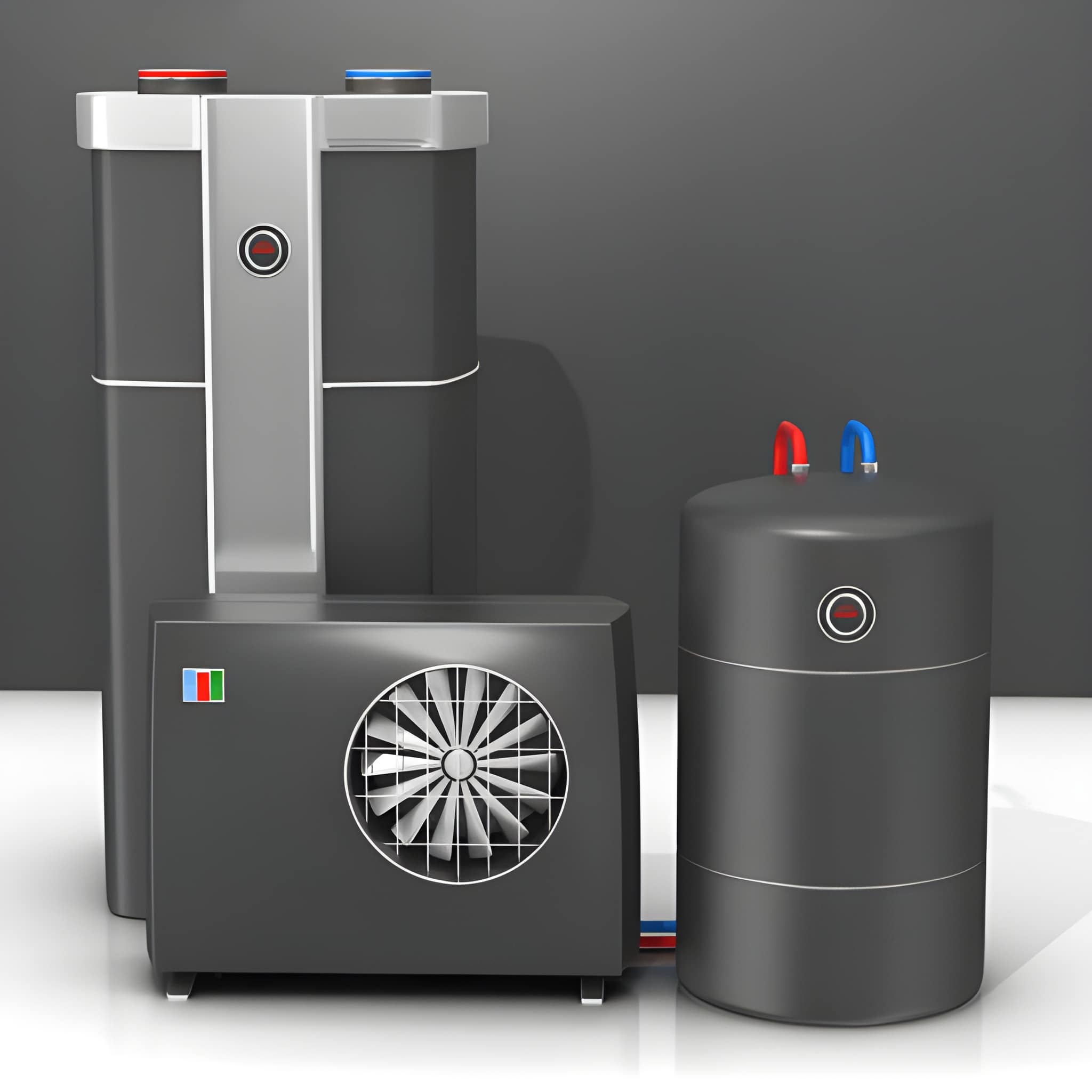
A gas furnace or boiler burns fuel to generate heat. An air source heat pump does not generate heat at all. It moves heat that already exists in the outdoor air into your home. Even in cold weather, outdoor air contains usable thermal energy, and the heat pump’s refrigerant cycle extracts and concentrates it. The electricity it consumes powers the compressor and the fan, not the production of heat itself.
This is measured by a metric called the Coefficient of Performance, or COP. A COP of 3.0 means the system delivers 3 units of heat for every 1 unit of electricity it consumes. A gas furnace at 95 percent efficiency delivers 0.95 units of heat per unit of energy. The difference is not marginal. It is the fundamental reason heat pumps are considered the most efficient way to heat a home with electricity.
ENERGY STAR-certified air source heat pumps commonly achieve COP values between 2.5 and 4.0 across a range of outdoor temperatures. At peak winter conditions, a modern cold-climate unit may operate at a COP of 1.5 to 2.0, still far ahead of direct electric resistance heating which has a COP of exactly 1.0.
The seasonal efficiency rating you will see on equipment labels is called HSPF2 (Heating Seasonal Performance Factor, version 2). The U.S. Department of Energy sets the minimum HSPF2 at 7.5 for new equipment, but top-performing models available today reach HSPF2 ratings of 10 or higher.
NYC’s Climate and Why It Matters for Heat Pump Consumption
New York City sits in IECC Climate Zone 4A, a mixed-humid zone with genuinely cold winters. The city averages approximately 4,900 heating degree days per year, compared to roughly 2,700 in Washington D.C. and 6,200 in Minneapolis. That places NYC solidly in the range where heat pump performance is meaningful but not extreme.
Average January temperatures in NYC typically sit between 26 and 39 degrees Fahrenheit. Modern cold-climate air source heat pumps are now rated to operate effectively at outdoor temperatures as low as -13 degrees Fahrenheit. This means for the vast majority of a NYC winter, a well-specified heat pump will operate efficiently without needing backup electric resistance strips to engage.
This is a significant shift from a decade ago, when heat pumps were considered unsuitable for northeastern climates. The newer generation of inverter-driven variable-speed compressors changes that calculus entirely.
Wondering How Much Energy Your Heat Pump Actually Uses? Talk to an Expert
Air source heat pumps can significantly cut your energy bills - but only when sized and installed correctly for your home. Our energy advisors offer free, hands-on help to guide you through NYSERDA heat pump programs, including rebates and incentives available to NYC homeowners. Visit https://nyserdarebateprograms.com/ to explore your options, or connect with an advisor who can walk you through everything step by step - by phone or in person.
How Much Electricity Does an Air Source Heat Pump Use in NYC?
The honest answer is that consumption varies considerably based on home size, insulation quality, thermostat habits, and equipment efficiency. But we can give you realistic ranges grounded in actual data.
According to NYSERDA’s residential energy use data for New York, the average New York household spends approximately $1,500 to $2,500 per year on space heating when using heating oil, and around $1,200 to $2,000 per year on natural gas. Those figures represent the energy cost benchmarks a heat pump needs to compete with.
For a typical NYC rowhouse or attached home of around 1,200 to 1,800 square feet, an air source heat pump system will consume approximately 3,500 to 6,500 kWh per year for space heating, depending on:
- The home’s insulation and air sealing quality
- The heat pump’s HSPF2 rating
- Thermostat set points
- How much of the home is conditioned
A larger detached home in Staten Island or Queens, ranging from 2,000 to 2,800 square feet, may consume 6,000 to 10,000 kWh per year for heating alone. A well-insulated NYC apartment converting a portion of its HVAC to a ductless mini-split may use as little as 1,500 to 2,500 kWh annually.
The U.S. Department of Energy estimates that air source heat pumps can reduce heating energy use by 50 percent or more compared to electric resistance baseboard heaters, which remain common in NYC apartments and older co-ops.
What Does That Cost on Your NYC Energy Bill?
Consolidated Edison (ConEd) residential electricity rates in New York City have risen steadily and now sit in the range of $0.22 to $0.28 per kWh for most residential customers when supply, delivery, and taxes are combined. The exact rate varies by rate class and season, but this range reflects what most NYC households actually pay per unit of electricity consumed.
Using a midpoint rate of $0.25 per kWh, here is what annual heat pump energy costs look like across different home sizes in NYC:
For a 1,200 square foot attached home, heating consumption of approximately 4,000 kWh per year translates to around $1,000 annually. For a 2,000 square foot detached home using roughly 7,000 kWh, the annual heating cost is approximately $1,750. A well-insulated 800 square foot apartment unit running a single-zone mini-split may spend as little as $400 to $600 per year on heating.
Compare those figures to what the same homes were spending on heating oil. At roughly $4.20 per gallon for No. 2 heating oil (a representative 2025 NYC price), a 1,200 square foot home burning 500 gallons per heating season would pay $2,100 annually. The heat pump equivalent in that home costs roughly half of that.
The New York State Energy Research and Development Authority has documented average annual savings for New York homeowners switching from oil heat to heat pumps at between $800 and $1,500 per year, depending on the original fuel type and home characteristics.
If you want to benchmark your current home’s energy profile before making any decisions, a professional home energy audit will give you a precise picture of where your heating dollars go and what a heat pump upgrade would realistically save.
The Hidden Variable: Your Home’s Envelope
This is the part that most heat pump discussions skip over, and it changes everything.
An air source heat pump’s energy consumption does not exist in isolation. It is always a function of how much heat your home loses. The better your home’s thermal envelope, the less work the heat pump has to do, the lower the COP required to stay comfortable, and the smaller the unit you need in the first place.
NYC’s older housing stock is notoriously leaky. Pre-war brownstones, mid-century apartment buildings, and post-war cape-style homes on Staten Island and in Queens frequently have inadequate insulation and significant air infiltration. A heat pump installed in a poorly sealed home will work harder, cycle more frequently, and use more electricity than the same unit in a well-insulated home.
Proper air sealing is the single most impactful envelope upgrade you can make before or alongside a heat pump installation. The Air Barrier Association of America has found that air infiltration accounts for 25 to 40 percent of a home’s heating and cooling load. For a heat pump running in a leaky NYC brownstone, that is a direct and preventable increase in annual electricity consumption.
Insulation works alongside air sealing to reduce that load further. The right insulation choice depends on your home type, the cavities available, and your budget. If you are researching your options, our guide to various insulation types and their applications covers the full spectrum, from blown-in cellulose to rigid foam to spray foam, with guidance on where each performs best in NYC home types.
For homes with attic space, attic insulation upgrades are consistently one of the highest-ROI improvements a homeowner can make. Our 2026 guide to attic insulation costs in NYC breaks down real contractor pricing and available rebates.
For homes where wall insulation is a priority, professional home insulation services can significantly reduce the heating load a heat pump is expected to carry.
Cold Climate Performance: Do the Numbers Hold Up in January?
The most common concern NYC homeowners raise about heat pumps is winter performance. Does efficiency drop when it is really cold? Yes. Does it drop to a point where the system becomes impractical or expensive to run? No, with modern equipment it does not.
Here is what the data actually shows. When outdoor temperatures fall to 17 degrees Fahrenheit, a high-performing cold-climate heat pump such as the Mitsubishi Hyper-Heat or Bosch IDS systems maintains a COP of approximately 1.5 to 2.2. That is still 50 to 120 percent more efficient than electric resistance heating.
NYC’s design heating temperature, the outdoor temperature a home’s heating system must be sized to handle, is 15 degrees Fahrenheit according to ASHRAE data. That means a properly sized cold-climate heat pump will handle NYC’s coldest conditions without needing to fall back on resistance heat strips in most hours of the year.
The Northeast Energy Efficiency Partnerships (NEEP) maintains a database of cold-climate heat pump performance data for the northeastern U.S. that is worth reviewing if you are at the equipment selection stage.
Wondering How Much Energy Your Heat Pump Actually Uses? Talk to an Expert
Air source heat pumps can significantly cut your energy bills - but only when sized and installed correctly for your home. Our energy advisors offer free, hands-on help to guide you through NYSERDA heat pump programs, including rebates and incentives available to NYC homeowners. Visit https://nyserdarebateprograms.com/ to explore your options, or connect with an advisor who can walk you through everything step by step - by phone or in person.
Heat Pump Water Heaters: Separate System, Same Efficiency Logic
Many NYC homeowners replacing their heating system also look at their domestic hot water costs at the same time, and it is worth addressing briefly here because the same efficiency principles apply.
A heat pump water heater uses the same refrigerant cycle logic as an air source space heating unit. Instead of a resistance element heating water directly, it extracts heat from the surrounding air to warm the tank. Heat pump water heaters achieve an Energy Factor of 3.0 to 4.0, compared to 0.90 to 0.95 for a high-efficiency gas water heater.
For NYC homeowners interested in replacing a gas or electric resistance water heater alongside a space heating upgrade, our complete 2026 guide to heat pump water heaters covers costs, savings, and available rebates in detail. You can also learn more about professional heat pump water heater installation services available through NYSERDA rebate programs.
NYSERDA Programs That Directly Reduce Your Heat Pump Costs
The energy consumption figures above become more manageable when you factor in what New York State makes available to homeowners who make the switch.
NYSERDA’s Clean Heat program offers rebates for qualifying air source heat pump installations. The amounts vary based on the type of system, the contractor, and income level, but rebates of $2,000 to $7,000 per system are commonly available to New York State residents. When stacked with federal tax credits under the Inflation Reduction Act, which offers up to 30 percent of installed costs up to $2,000 for heat pump systems, the upfront investment picture changes substantially.
For income-qualified households, the EmPower Plus program can cover heat pump installations and insulation upgrades at no cost or significantly reduced cost. The program is specifically designed for low-to-moderate-income New York households and is one of the most comprehensive weatherization and electrification assistance programs in the country.
The Weatherization Assistance Program works in a complementary way, funding insulation, air sealing, and related measures that lower the heating load before or alongside a heat pump installation, making the system more efficient from day one.
For homeowners who want to see all available services under NYSERDA rebate programs in one place, that is a good starting point before booking a consultation.
How to Reduce Air Source Heat Pump Energy Consumption in Your NYC Home
If you already have a heat pump installed or are planning an installation, these are the interventions with the highest documented impact on reducing annual electricity consumption.
Starting with a home energy audit is the logical first step. A blower door test identifies exactly where air is leaking out of your home’s envelope. Thermal imaging during the audit shows where insulation is absent or degraded. This diagnostic data directly informs the priority order for upgrades.
Air sealing should follow the audit. Gaps around plumbing penetrations, electrical boxes, recessed light fixtures, and attic hatches are common in NYC housing and each one represents a direct drain on heat pump efficiency. Professional air sealing services target these points systematically.
If your home has rooms where air quality is inconsistent or ventilation is compromised, that can also affect how a heat pump cycles. Indoor air quality solutions designed to work alongside heat pump systems ensure the mechanical ventilation side of the equation is handled correctly.
On the equipment side, keeping filters clean, scheduling annual service visits, and using a programmable or smart thermostat setback strategy can reduce heat pump energy use by 5 to 15 percent annually according to DOE residential energy efficiency guidance.
For a broader look at demand-side strategies, our guide to reducing energy bills in 2025 covers both heating and non-heating electricity use, which is relevant because your total electricity bill is the figure that matters.
The NYC Carbon Picture: Why This Matters Beyond Your Bill
New York City is in the middle of the most ambitious building decarbonisation effort of any major U.S. city. Local Law 97, enacted as part of the Climate Mobilization Act, sets binding carbon emissions limits for buildings over 25,000 square feet starting in 2024, with limits tightening significantly in 2030. For residential buildings, the law creates both regulatory pressure and market signals around electrification.
The NYC Mayor’s Office of Climate and Environmental Justice has identified building energy use as the largest single source of the city’s greenhouse gas emissions, accounting for approximately 70 percent of citywide output. Air source heat pumps powered by an increasingly renewable-heavy New York grid represent the primary residential pathway toward reducing that figure.
As New York State’s grid continues to decarbonise, the effective carbon intensity of a kilowatt-hour of electricity falls every year. This means a heat pump installed today becomes progressively cleaner over its 15 to 20 year operational life without any change to the equipment itself. That is not a dynamic available to a gas furnace or oil boiler.
A Direct Comparison: Air Source Heat Pump vs. Other Systems in NYC
To make this concrete, here is how annual heating energy costs compare for a representative 1,500 square foot NYC home heated to 68 degrees Fahrenheit through a typical heating season:
A No. 2 heating oil system at 85 percent efficiency, consuming approximately 650 gallons per season at $4.20 per gallon, costs approximately $2,730 per year. A natural gas system at 92 percent AFUE consuming approximately 900 therms at $1.30 per therm costs approximately $1,170 per year. An electric resistance baseboard system consuming approximately 12,000 kWh at $0.25 per kWh costs approximately $3,000 per year. A modern air source heat pump with an HSPF2 of 9.5 consuming approximately 5,200 kWh at $0.25 per kWh costs approximately $1,300 per year.
These figures are illustrative rather than exact, as individual home characteristics drive the actual outcome. But the structure of the comparison is consistent with what independent research shows. ACEEE’s analysis of heat pump economics in northeastern states consistently finds that cold-climate heat pumps are cost-competitive with or cheaper than gas heating in most New York markets at current energy prices.
Wondering How Much Energy Your Heat Pump Actually Uses? Talk to an Expert
Air source heat pumps can significantly cut your energy bills - but only when sized and installed correctly for your home. Our energy advisors offer free, hands-on help to guide you through NYSERDA heat pump programs, including rebates and incentives available to NYC homeowners. Visit https://nyserdarebateprograms.com/ to explore your options, or connect with an advisor who can walk you through everything step by step - by phone or in person.
Final Thoughts: Consumption Is Only One Part of the Story
Air source heat pump energy consumption in NYC is real, it is measurable, and it is manageable. The systems use electricity, and electricity in New York is not cheap. But they use that electricity with a multiplier effect that no combustion system can match, and when paired with a well-sealed, well-insulated home, they deliver comfortable warmth at lower annual cost than oil heat and at broadly comparable cost to gas, while positioning your home for a cleaner grid and rising carbon policy.
The homeowners who see the best outcomes are the ones who treat heat pump installation not as an isolated equipment swap, but as part of a whole-home efficiency strategy. That starts with understanding where your home currently stands, which is what a professional home energy audit is designed to tell you.
If you are ready to explore what an air source heat pump installation would cost, what you qualify for under NYSERDA rebate programs, and what your actual payback period looks like given your home’s specifics, reach out to our team for a no-obligation consultation. The numbers are more compelling than most NYC homeowners expect.