Your complete guide to weather stripping in 2025
How a Drafty New York Home Sparked a Simple Fix
If you’ve ever lived through a New York winter, you know the feeling: that sneaky little draft that slides under your front door like it’s paying rent. The kind that makes your heating system work double-time and still leaves your toes cold. Last winter, during a particularly sharp windstorm in Upstate NY, I visited a homeowner in Buffalo—let’s call her Laura—who swore her living room had “its own personal wind tunnel.”
When I stepped into her home, I didn’t need fancy tools to find the problem. The draft brushed against my ankles before she even shut the door. And here’s the wild part: fixing the issue cost her under $40 and took less than four hours. Her heating bills dropped by nearly $200 that winter. One weekend + one simple DIY fix = real savings.
If you’ve been battling cold spots, high energy bills, or a furnace that never seems to take a break, simple weatherstripping might be the quickest win you’ve overlooked.
This guide will walk you through everything—the science, the savings, the materials, the step-by-step installation, troubleshooting, maintenance, ROI, and real New York case studies.
And throughout the article, when I say “simple,” I mean it. You don’t need technical skills, special training, or a contractor’s budget. Weatherstripping is truly one of the few home improvement projects that pays for itself almost immediately.
For more New York energy savings resources, visit:
👉 Explore NY energy rebates on our homepage
Why Weatherstripping Matters: The Science and Savings
Before we get into tools and techniques, let’s talk about why this works—and why it works so well in New York.
Air Leakage 101
Every home has controlled airflow (like vents) and uncontrolled airflow, which is the problem. Weatherstripping targets uncontrolled airflow around:
- Doors
- Windows
- Attic hatches
- Crawlspace doors
- Garage doors
In energy terms, air leakage is measured in CFM (Cubic Feet per Minute)—how much air escapes or enters your home. The more leakage, the harder your HVAC system works.
Even a ⅛-inch gap around a door can be equivalent to a brick-size hole in your wall.
The Heating and Cooling Connection
Cold air sneaks in → warm indoor air escapes → your furnace cycles more often → your energy bills climb.
This cycle is especially noticeable in New York where:
- Winters in Buffalo and Syracuse regularly drop below 20°F
- Coastal wind patterns around NYC accelerate air infiltration
- Older homes (pre-1980s) lack modern insulation infrastructure
The Savings: What the Data Says
- The U.S. Department of Energy notes that air sealing and weatherstripping can reduce heating and cooling costs by 10–20%.
- ENERGY STAR reports that the average U.S. home wastes 25–40% of energy through drafts.
- In New York, where heating costs run higher than the national average, that can equal hundreds of dollars per year.
Weatherstripping is inexpensive—typically $10–$50 for most projects—and often delivers the fastest ROI of any energy-efficiency upgrade.
Learn more about NY energy rebates on our homepage:
👉 Visit our homepage for NY rebate info
Ready to Slash Your Energy Bills This Winter?
Simple weatherstripping is a great DIY start — but why stop there? Seal air leaks, upgrade insulation, and add heat pumps to maximize your comfort and savings. With NYSERDA and Inflation Reduction Act rebates, many New York homeowners are getting thousands back (or even full upgrades at no upfront cost). Don’t leave money on the table.
Types of Weatherstripping: Choosing the Right One for Your Home
Different weatherstripping materials suit different parts of the home.
Here’s a breakdown of the most helpful options:
1. Felt Weatherstripping
- Cost: Very cheap
- Best for: Interior doors, lightly used areas
- Pros: Easy to cut and install
- Cons: Short lifespan (1–2 years), not ideal for heavy weather exposure
2. Foam Tape
- Cost: Low to moderate
- Best for: Window sashes, door jambs, attic hatches
- Pros: Great for irregular gaps
- Cons: Adhesive can fail in humid summers
3. Vinyl V-Strip
- Cost: Moderate
- Best for: High-traffic exterior doors
- Pros: Durable, flexible, weather-resistant
- Cons: Requires more precise installation
4. Magnetic Weatherstripping
- Cost: Higher
- Best for: Metal doors
- Pros: Creates refrigerator-style airtight seal
- Cons: Not suitable for wood doors
5. Door Sweeps
- Cost: Low to moderate
- Best for: Bottom of exterior doors
- Pros: Blocks large gaps and pests
- Cons: Must be cut accurately to fit
6. Eco-Friendly Bamboo or Recycled Rubber Options
- Cost: Moderate
- Best for: Sustainable homes
- Pros: Low environmental impact, long-lasting
- Cons: Limited availability in some local stores
Quick Comparison Table
| Material | Best For | Pros | Cons |
| Felt | Interior doors | Cheap, beginner-friendly | Short lifespan |
| Foam | Windows, attic hatches | Good for irregular gaps | Adhesive failure risk |
| Vinyl V-Strip | Exterior doors | Durable and weatherproof | Requires precision |
| Magnetic | Metal doors | Strong airtight seal | Higher cost |
| Door Sweep | Door bottoms | Good gap coverage | Needs accurate trimming |
| Bamboo/Rubber | Eco upgrades | Sustainable & durable | Harder to source |
For more home upgrade ideas, visit our homepage:
👉 See energy upgrades on our homepage
Tools and Materials: Your Weekend Shopping List
Good news: you don’t need anything fancy.
Shopping List
- Weatherstripping material of choice
- Door sweep (if needed)
- Measuring tape
- Utility knife or scissors
- Screwdriver
- Hammer and finishing nails (for nail-in types)
- Level (for door sweeps)
- Rubbing alcohol (for surface cleaning)
- Safety gear: gloves & safety glasses
Estimated Budget
Most weatherstripping projects cost between:
- $20–$50 for basic door and window sealing
- $50–$100 for full home coverage
Typical New York stores where you can find these supplies:
- Home Depot (Albany, Rochester, Poughkeepsie)
- Lowe’s
- Local hardware shops (which often have better foam tape options)
Find more budget-friendly energy tips here:
👉 Visit our homepage for cost-saving ideas
Ready to Slash Your Energy Bills This Winter?
Simple weatherstripping is a great DIY start — but why stop there? Seal air leaks, upgrade insulation, and add heat pumps to maximize your comfort and savings. With NYSERDA and Inflation Reduction Act rebates, many New York homeowners are getting thousands back (or even full upgrades at no upfront cost). Don’t leave money on the table.
Step-by-Step Installation Guide: From Doors to Windows
This is where your weekend project begins. Follow these steps and you’ll be sealing drafts like a seasoned pro.
Step 1: Inspect and Measure Gaps
Use a flashlight or simply run your hand along edges to feel drafts.
Measure gaps in ⅛-inch increments. Most weatherstripping is rated for a range (e.g., ⅛–¼”).
Step 2: Prepare the Surface
- Clean the area with warm water
- Wipe down with rubbing alcohol
- Let it dry completely
Adhesive-based materials don’t stick well to dusty or wet surfaces.
Step 3: Install Door Weatherstripping
A. Sides and Top
- Cut weatherstripping to length
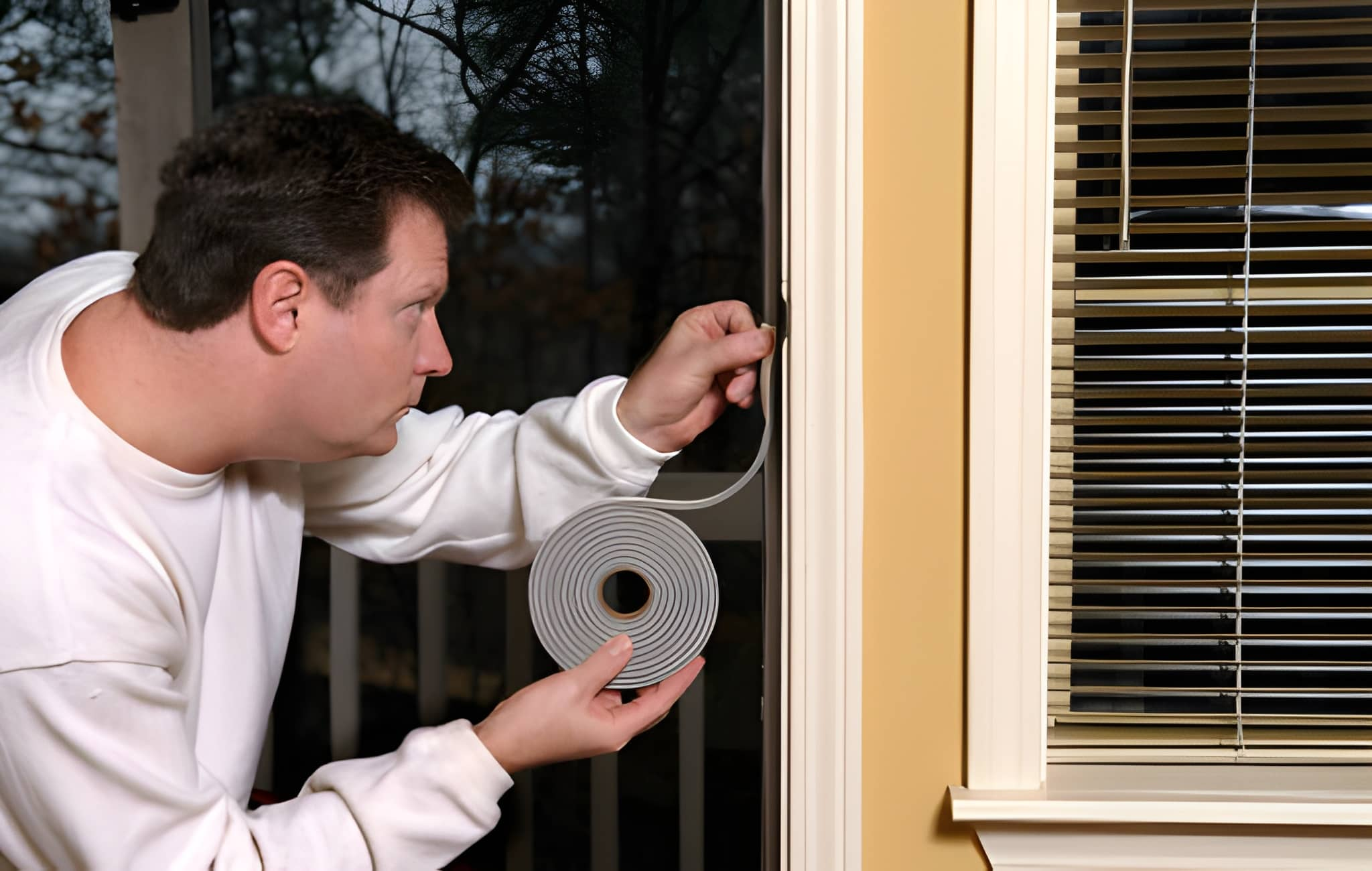
- Peel adhesive backing
- Press firmly along the door frame
- Close the door to ensure snug contact
- Adjust if rubbing occurs
B. Door Sweep
- Measure door width
- Cut sweep to size
- Align bottom edge so bristles or rubber just touch the floor
- Screw into place using level
- Test for smooth opening and closing
Diagram description for WordPress:
Imagine a side-view cross-section of a door. The sweep should gently brush the floor, not drag. The weatherstripping on the jamb should lightly compress when the door closes.
Step 4: Install Window Weatherstripping
For double-hung windows:
- Raise the lower sash
- Apply foam or vinyl strip along top edge
- Lower sash to compress
- Repeat on upper sash
- Test for smooth operation
Step 5: Garage Door Sealing
This is optional but incredibly helpful.
- Install door-bottom gasket
- Add side and top vinyl seals
- Check for daylight—none should be visible
Troubleshooting Common Issues
- Door won’t close: Material is too thick → switch to smaller profile
- Adhesive not sticking: Reclean with alcohol → ensure surface is fully dry
- Draft persists: Check hinges → sagging doors create new gaps
- Windows hard to open: Remove and reposition vinyl strips
For more DIY tools, visit our main site:
👉 NY Energy Savings
Ready to Slash Your Energy Bills This Winter?
Simple weatherstripping is a great DIY start — but why stop there? Seal air leaks, upgrade insulation, and add heat pumps to maximize your comfort and savings. With NYSERDA and Inflation Reduction Act rebates, many New York homeowners are getting thousands back (or even full upgrades at no upfront cost). Don’t leave money on the table.
Maintenance and Long-Term Care
Weatherstripping isn’t “set it and forget it.” Regular checks ensure maximum savings.
Seasonal Inspection Schedule
- Fall: Look for wear before winter
- Spring: Check for moisture damage
- Summer: Monitor adhesive performance in humidity
Common Issues and Fixes
- Peeling adhesive: Replace immediately—air leakage ramps up fast
- Flattened foam: Replace every 1–2 years
- Cracked vinyl: Happens in freezing temps; swap out in Spring
Upgrades for Even More Savings
- Add caulk around frames
- Pair with a smart thermostat for amplified ROI
- Install insulated curtains for winter
Real Results and ROI: What New York Homeowners Are Seeing
Here are a few fictional but realistic case studies based on actual energy-audit data.
Case Study 1: Laura in Buffalo
- Project cost: $38
- Time: 3.5 hours
- Improvement: ~15% reduction in air leakage
- Savings: $200/year
ROI formula:
Savings = (Leakage Reduction % × Annual Heating Cost) – Project Cost
For Laura:
(0.15 × $1,350) – $38 = $164 Net Savings First Year
Case Study 2: Mike in Queens
- Project cost: $62
- Savings: $120/year
- Bonus: Improved indoor comfort during nor’easter season
Case Study 3: The Albany Bungalow
- Project cost: $44
- Savings: $165/year
- Additional upgrade: Added smart thermostat later → combined savings increased to $280/year
Learn how to maximize rebates on our homepage:
👉 Apply for NY savings programs
Ready to Slash Your Energy Bills This Winter?
Simple weatherstripping is a great DIY start — but why stop there? Seal air leaks, upgrade insulation, and add heat pumps to maximize your comfort and savings. With NYSERDA and Inflation Reduction Act rebates, many New York homeowners are getting thousands back (or even full upgrades at no upfront cost). Don’t leave money on the table.
Conclusion
Weatherstripping is one of those rare, simple home improvements that checks every box:
Cheap
Fast
Beginner-friendly
High-impact
Perfect for New York’s climate
If you want to save money this winter (and summer), improve comfort, and stop your HVAC system from working overtime, make weatherstripping your next weekend project. Your wallet will thank you—so will your toes.